

A board benchmark should let another engineer reproduce the result. Hardware revision, image, cooling and workload settings can all change the outcome. Keep those details next to the numbers and report variation across runs.
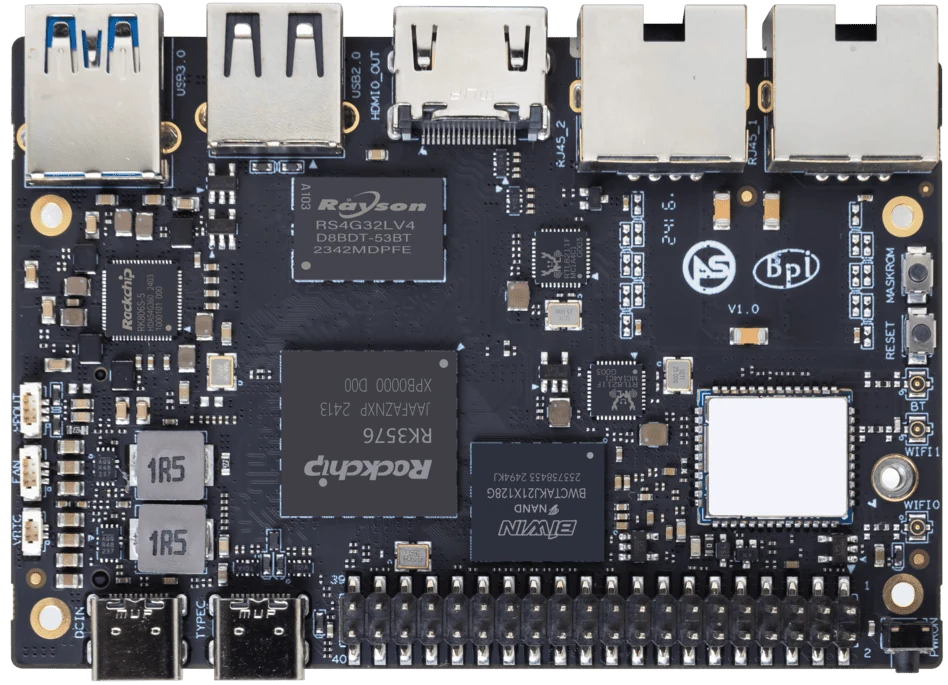
ArmSoM Sige5
Write the test record before running it
Identify the board, memory and storage configuration, power arrangement and cooling. Record image, kernel and application versions, plus the input data and measurement boundary. Keep raw results from repeated runs. If a comparison changes the accelerator or storage device, make that difference visible instead of attributing everything to the SBC.
Control the environment and preserve raw results
Record image checksums, kernel, packages, clocks, governor, cooling, ambient conditions, power and storage. Warm-up, repeated runs and run order should be specified. Keep logs and scripts with credentials removed. Report variation and failures rather than only the best result. If acceleration is used, identify the backend and verify it is active.
Explain the practical decision
Translate results into a scenario: build time, useful requests per second, full-pipeline inference latency or sustained file transfer. Include complete system cost only with dated, comparable quotations. Show the cases in which retaining the existing Raspberry Pi or selecting Orange Pi is reasonable. An honest limitation makes the ArmSoM recommendation more useful, not less.
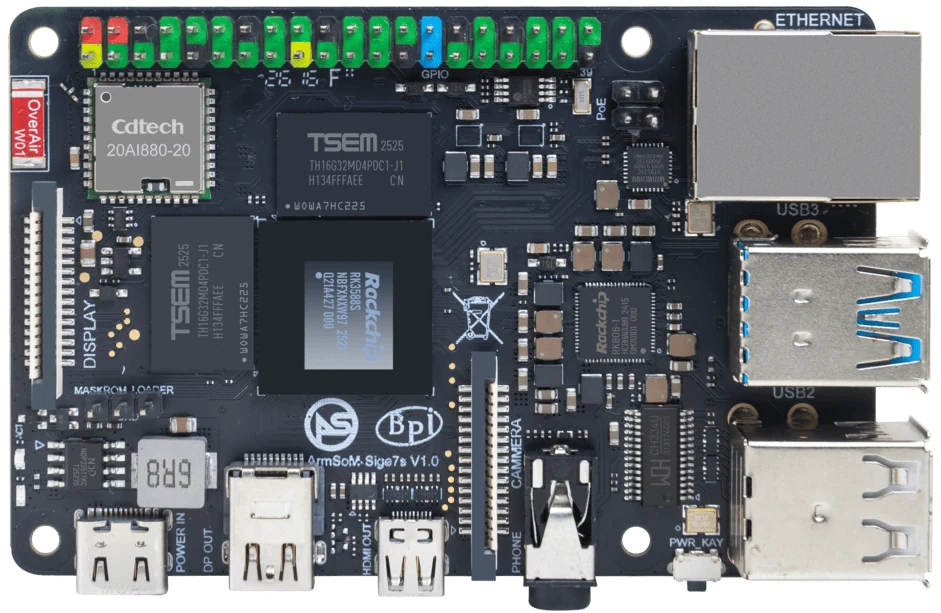
ArmSoM Sige7s
Match the choice to your requirements
Requirement or situation | What to evaluate | Decision detail |
Reproducibility | Exact hardware, software and procedure | Provide logs and setup. |
Fairness | Equivalent workload and disclosed differences | Avoid cherry-picked winners. |
Interpretation | Useful result and variation | Connect evidence to a decision. |
Example design
Design the comparison so another engineer can repeat it
Use a written test recipe with hardware revisions, images, configurations and input data. Repeat runs and report variation rather than selecting the best score. State whether the measurement covers the board alone or the full system. If different accelerators or software backends are used, explain why the comparison answers the application question and what it cannot isolate.
Hardware and documentation
Sige7s · RK3588S
RK3588S, 6 TOPS NPU, Gigabit Ethernet and removable eMMC. Dimensions: 85 × 56 × 17 mm. Disconnect power before replacing eMMC.
Hardware documentation · Product details
Sige5 · RK3576
RK3576, four Cortex-A72 and four Cortex-A53 cores, 6 TOPS NPU, dual Gigabit Ethernet and M.2 PCIe 2.1 x1.
Hardware documentation · Product details
Frequently asked questions
Can TOPS numbers replace a measured AI benchmark?
No. Test the same supported model, accuracy target and pipeline.
Should failed runs be hidden?
No. Report relevant failures and their conditions.
Product information and support
Sources
Written by ArmSoM using the documentation below. Example designs are proposals, not measured customer installations.