Eight application cores
Four Cortex-A76 cores and four Cortex-A55 cores provide application compute for embedded systems.
RK3588 · 8nm · up to 2.4GHz
A compact core.
Built into your next product.
RK3588 octa-core compute, a 6 TOPS NPU and up to 32GB memory in a compact 506-pin LGA module for custom carrier boards and embedded product integration.
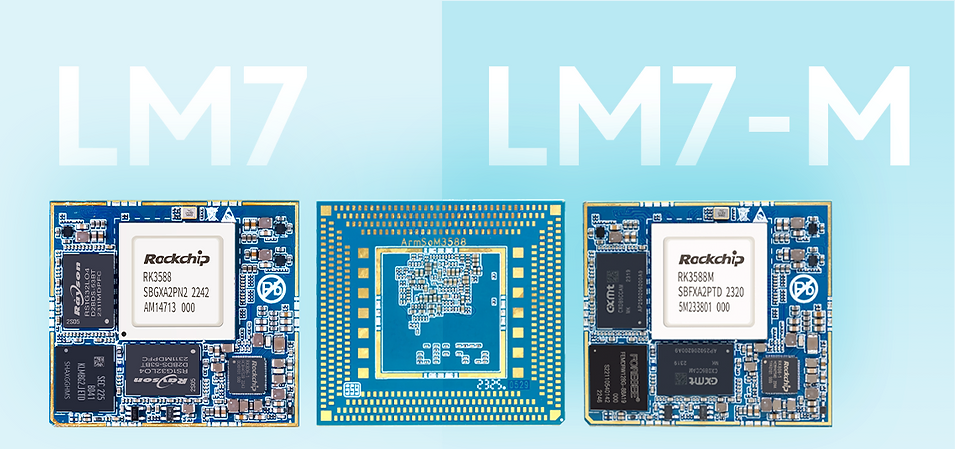
Compute, memory and eMMC.
Integrate through your carrier-board design.
Put RK3588 compute at the center of a carrier board designed for your product.
Four Cortex-A76 cores and four Cortex-A55 cores provide application compute for embedded systems.
RK3588 · 8nm · up to 2.4GHzUse the integrated NPU with the Rockchip toolchain for supported local inference workloads.
6 TOPS · INT4 / INT8 / INT16The 506-pin LGA package is designed for permanent hardware integration, with reference materials for carrier-board development.
45 × 50mm · 506 pinsSelect an appropriate memory and eMMC configuration for your operating system and application.
Up to 32GB memory · eMMC optionsBring display, camera and video-processing capabilities into your carrier-board design.
Up to 8K60 decode · 8K30 encodeRoute supported PCIe, USB, Ethernet MAC and peripheral signals according to the module documentation.
PCIe 3.0 · USB · GMAC · MIPIOfficial module views and size references from the LM7 documentation.
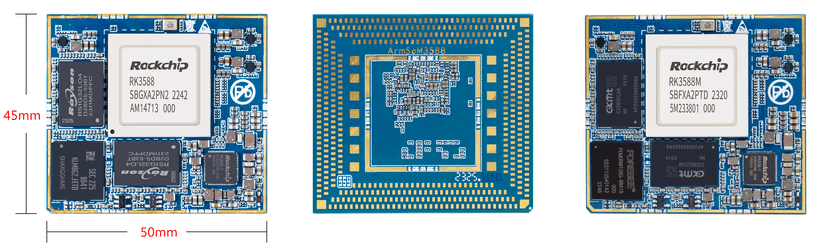
Component layout and underside pads for the documented LM7 module family.
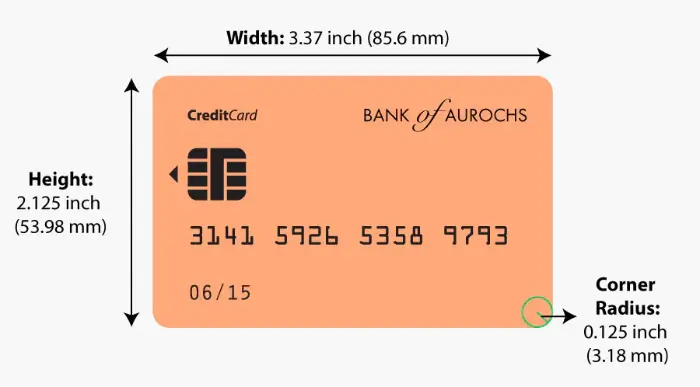
Official size comparison. LM7 measures 45 × 50mm.
Select an image to open the full-resolution view.
Application, AI and media resources in one module.
LM7 brings the RK3588 processor, memory and eMMC together in an LGA module for embedded integration. The available signal functions give you options for cameras, displays, storage and network connectivity.
Develop with the reference kit, then validate power design, pad layout, interface multiplexing and software support on your own carrier.
Explore the hardware specifications ↗Use the W3 development platform to evaluate the LM7 software and hardware resources.
LGA package for carrier-board integration
Bring up your system and application using the documented W3 development platform.
Review module pad definitions, reference schematics, power and interface routing.
Check assembly, thermal behavior, signal integrity and software support with your peripherals.
LM7 is an LGA core module. The physical ports on the development kit are carrier-board features and are not sockets installed on the module.
Available functions are routed through the LGA interface. Simultaneous use depends on pin multiplexing and the carrier design.
Up to ×4 lane configuration
Carrier-routed USB signals
RGMII / RMII Ethernet signals
Camera and display signals
Multiplexed display interfaces
HDMI RX interface
Embedded peripheral buses
Application control signals
Use the W3 development kit to evaluate LM7. This image shows the complete carrier board with its physical ports and expansion connectors.
The image describes the development kit, not the standalone LM7 module. Your custom carrier determines which module signals become physical ports.
View hardware documentation ↗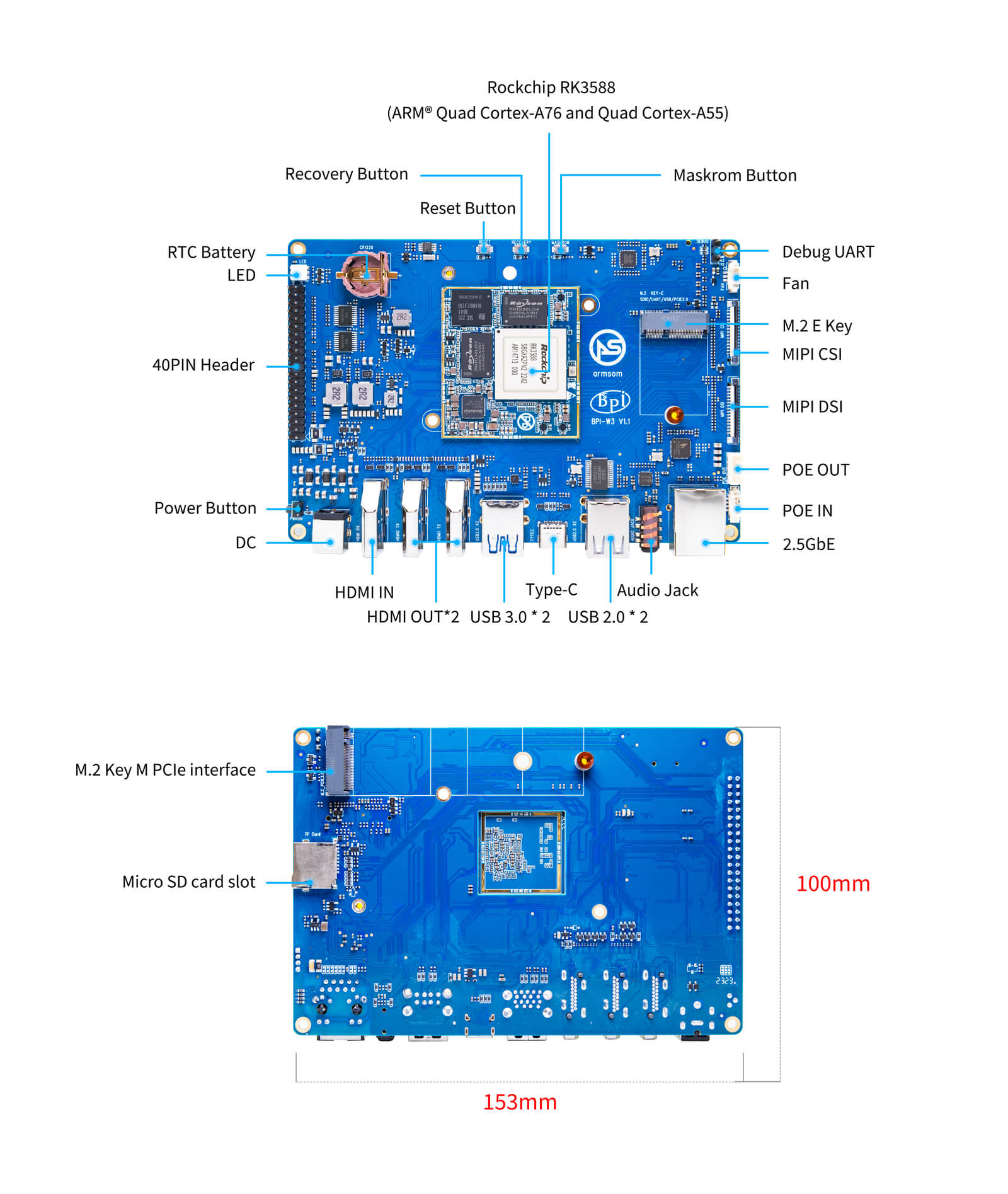
A compute foundation for embedded product teams building their own carrier boards.
Integrate camera signals, local inference and application processing on your hardware.
Develop a custom ARM computing platform with your required network and storage interfaces.
Build around the module’s hardware video engine and display/camera resources.
Control the carrier-board shape, connectors and peripheral selection for your product.
These describe the module. Physical ports on the W3 development kit belong to its carrier board.
| Specification | ArmSoM LM7 |
|---|---|
| Processor | Rockchip RK3588 · 8nm |
| CPU | 4 × Cortex-A76 up to 2.4GHz + 4 × Cortex-A55 up to 1.8GHz |
| GPU | Arm Mali-G610 MP4 |
| NPU | Up to 6 TOPS (INT8); INT4 / INT8 / INT16 mixed precision |
| Memory | LPDDR4 / LPDDR4x configurations; documented maximum 32GB |
| Storage | 16GB / 32GB / 64GB / 128GB eMMC options |
| Video decoding | Up to 8K60 H.265 / VP9 / AVS2; 8K30 H.264; 4K60 AV1 |
| Video encoding | Up to 8K30 H.264 / H.265 |
| Package | 506-pin LGA |
| PCIe | PCIe 3.0 up to ×4; PCIe 2.1 signals subject to multiplexing |
| Networking signals | Up to 2 × GMAC, RGMII / RMII; physical Ethernet requires carrier hardware |
| Display / camera | HDMI / eDP / DP and MIPI display/camera functions; see multiplexing definitions |
| Other signals | USB / SATA / UART / SPI / I²C / I²S / CAN / GPIO / PWM; see full pin table |
| Module supply | 4V, ±5% |
| Operating temperature | 0°C to 70°C |
| Dimensions | 45 × 50 × 4.5mm |
| Weight | Approximately 13.4g |
| PCB | 12-layer design |
Maximum controller counts and signal functions are not a promise of simultaneous availability. Validate the LGA pad mapping, interface multiplexing and carrier-board configuration.
Hardware files, system images and source code, all within reach.
Module specifications and signal definitions
W3 hardware and getting-started resources
Module and development-kit reference resources
Official and community download links
ArmSoM Rockchip kernel repository
Rockchip RKNN / LLM documentation
System image support is documented through the W3 development platform. Validate the required image and drivers for your own carrier.
No. LM7 is a 506-pin LGA system-on-module. It must be integrated with suitable carrier hardware. The W3 development kit provides a ready-made evaluation platform.
The purchase button opens the existing LM7 development-kit product page. Contact sales for standalone-module configurations and product integration requirements.
The module specification lists a 4V supply with ±5% variation. The development carrier has its own power design. Do not apply its external input voltage directly to LM7.
No. The module exposes signal functions through LGA pads. The carrier board implements physical sockets, supporting circuitry and routing.
Many RK3588 functions share pins or PHY resources. Check the complete module pad map and multiplexing requirements before choosing a simultaneous interface configuration.
Start with the documented W3 kit image and the ArmSoM source resources. Bring up your application there, then adapt the device tree, drivers and configuration to your custom carrier.
Evaluate the LM7 development kit or contact sales about core-module integration.