

A compute-module alternative has to fit a carrier and a software plan. ArmSoM CM5, CM7s, AIM7 and LM7 use different connector or package formats, so choosing between them begins with the product architecture rather than a shared “module” label.
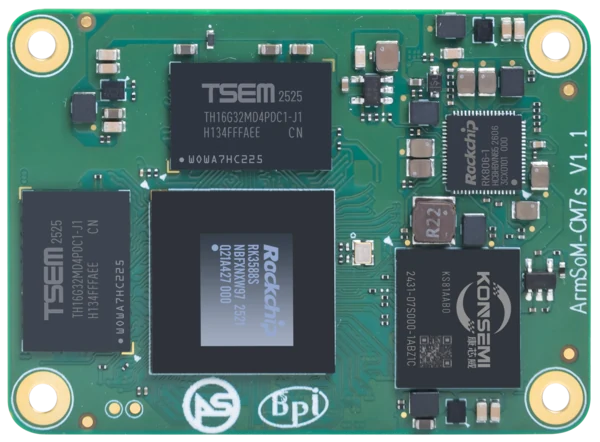
ArmSoM CM7s
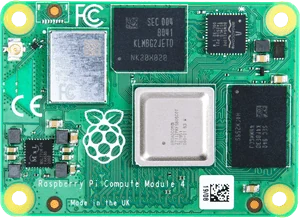
Raspberry Pi Compute Module 4 Photo: Raspberry Pi
Images identify the boards and are not to physical scale. Pictured configurations and included accessories may differ.
Decide whether the carrier already exists
An existing carrier constrains power, signal routing and mechanical clearance. A new carrier gives more freedom, but introduces layout, assembly and validation work. List the required camera, display, storage and control interfaces for both cases. Use released pinouts and mechanical drawings to narrow the module choices.
Compare the cost of a complete design
Include carrier development, connector sourcing, thermal design, provisioning and software maintenance. A module can reduce some high-speed design work while leaving interface protection, power regulation and compliance responsibilities with the finished product. Keep an existing Raspberry Pi module when its validated carrier and software remain the best fit. Switch when a specific ArmSoM platform feature justifies the engineering work.
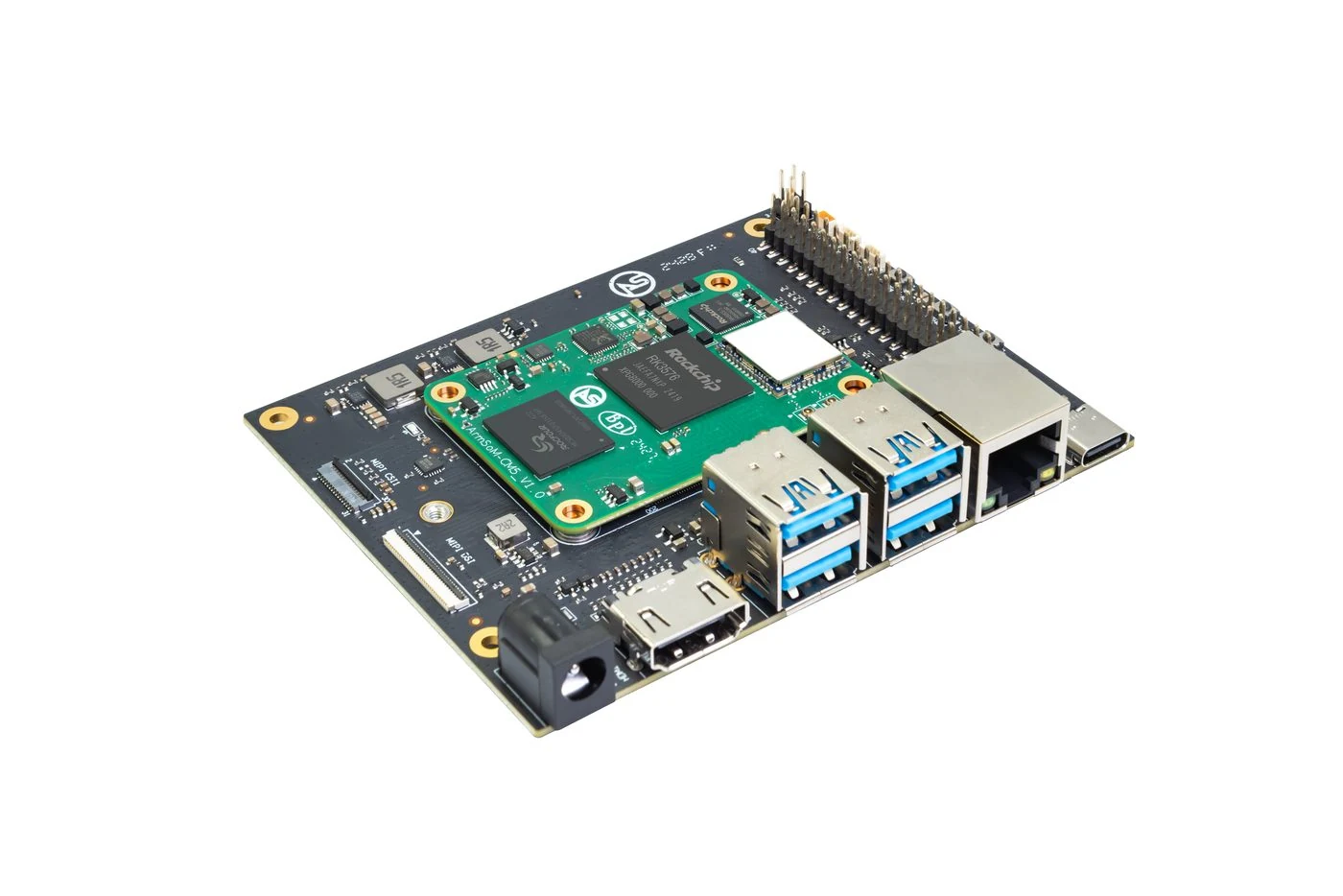
ArmSoM CM5 evaluation carrier and module.
Match the choice to your requirements
Requirement or situation | What to evaluate | Decision detail |
CM5 | RK3576 module | Evaluate the exact carrier and NPU software. |
CM7s | RK3588S module | Inspect three-connector routing and revision notes. |
CM1 / LM7 | Different integration classes | Do not combine low-power control and LGA designs into one drop-in claim. |
Example design
Reduce the carrier requirements to a one-page brief
For a custom device, list external connectors, supply input, enclosure limits and the software workload before comparing modules. A low-memory controller and a multi-camera AI terminal should not share an undifferentiated module shortlist. Separate connector-based modules from soldered LGA integration. A smaller module may move power, networking or service-access work onto the carrier, which changes both the engineering effort and the assembly process.
Hardware and documentation
CM5 · RK3576
RK3576 module, 6 TOPS NPU, 55 × 40 mm and two 100-pin connectors. Module supply: 4 V recommended, 5.5 V maximum. The planned v2.0 memory option is LPDDR4/4x; current availability must be confirmed.
Hardware documentation · Product details
CM7s · RK3588S
RK3588S, 6 TOPS NPU, 55 × 40 mm and three 100-pin connectors. ArmSoM offers CM7s as an Orange Pi CM5 replacement option; confirm the exact carrier, revision and software combination.
Hardware documentation · Product details
CM1 · RK3506J
RK3506J with three Cortex-A7 cores, a Cortex-M0 and 256 MB / 512 MB DDR3L options. The 5 V module supply differs from the CM1-IO carrier’s 12 V input.
Hardware documentation · Product details
LM7 · RK3588
RK3588 in an LGA506 module format. Module input: 4 V ±5%. Follow the module power requirements separately from a development carrier’s external input.
Hardware documentation · Product details
Frequently asked questions
Does module replacement avoid carrier development?
Only when the exact existing carrier has been validated; otherwise electrical and mechanical changes may be necessary.
Product information and support
Sources
Written by ArmSoM using the documentation below. Example designs are proposals, not measured customer installations.