

An I2C sensor migration can fail because of wiring, bus selection or driver configuration. Moving the same Python code is only part of the job. Match the sensor’s electrical requirements to the target board before investigating application errors.
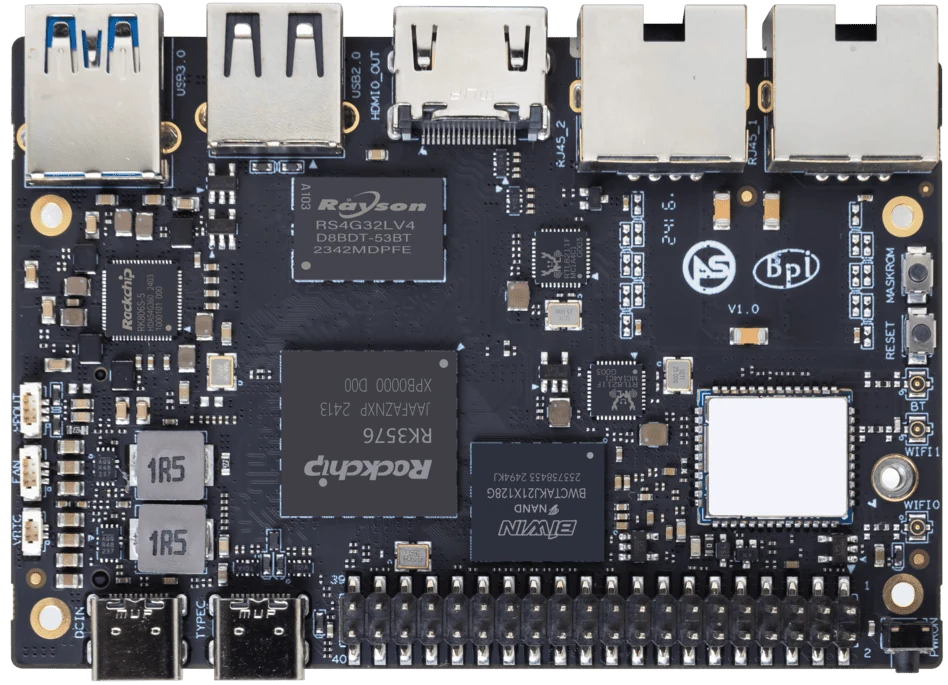
ArmSoM Sige5
Check the bus and pull-ups
Confirm voltage levels, pull-up arrangements, ground and the intended I2C pins. Check pin multiplexing and which Linux bus corresponds to that header. Verify the sensor address and supported driver using its documentation. Avoid assuming that a bus number from Raspberry Pi identifies the same physical connection on ArmSoM.
Find the correct Linux adapter
Enable the intended bus through the image’s documented configuration. Adapter numbers are not universal across boards or kernels. Identify the hardware connection and bind the application to the correct device. Prefer a suitable kernel driver where it provides the required interface; otherwise use an appropriate userspace library with clear error handling.
Validate readings, not only detection
A device acknowledging an address does not prove that its output is correct. Read an identity register when supported, check units and scaling, and compare a known condition. Test repeated reads, startup and a disconnected sensor. Avoid blind probing commands on buses containing devices that may react unexpectedly to them.
Match the choice to your requirements
Requirement or situation | What to evaluate | Decision detail |
Wiring | Supply, logic levels and pull-ups | Check before connecting. |
Linux | Adapter and driver | Do not assume Raspberry Pi bus numbers. |
Data | Identity, scale and known input | Verify meaningful readings. |
Example design
An I2C migration needs a new bus map
Linux bus numbers can change between boards and images. Find the controller and pins used by the actual hardware, then confirm the device address, voltage and pull-ups. Use the component’s documented identification operation rather than indiscriminate writes. If multiple devices share the bus, test the complete assembly at the intended clock speed and cable arrangement.
Hardware and documentation
Sige5 · RK3576
RK3576, four Cortex-A72 and four Cortex-A53 cores, 6 TOPS NPU, dual Gigabit Ethernet and M.2 PCIe 2.1 x1.
Hardware documentation · Product details
Sige7s · RK3588S
RK3588S, 6 TOPS NPU, Gigabit Ethernet and removable eMMC. Dimensions: 85 × 56 × 17 mm. Disconnect power before replacing eMMC.
Hardware documentation · Product details
Frequently asked questions
Can the same Python sensor code be reused?
Often the sensor-level logic can be adapted, but bus selection, dependencies and GPIO assumptions need review.
Product information and support
Sources
Written by ArmSoM using the documentation below. Example designs are proposals, not measured customer installations.