

PDM, I2S and USB audio lead to different microphone and codec arrangements. Choosing one depends on channel needs, driver support and the physical design. P2 Pro’s audio interfaces are a starting point; the complete capture path needs validation.
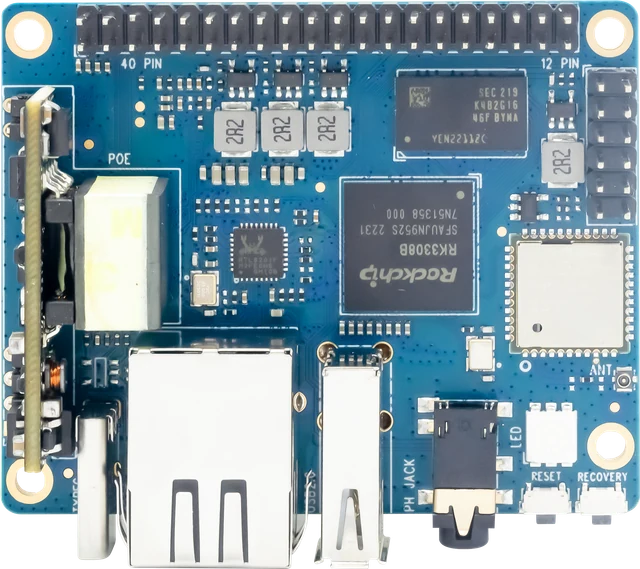
ArmSoM P2 Pro
Follow the audio from sensor to application
Record clocks, channel mapping, sample format and the conversion path for the chosen device. Confirm the driver configuration in the target image. Capture a test recording before adding recognition or signal processing. USB can move some complexity into the audio device, while board-level interfaces expose more of it to the carrier and driver design.
Check synchronization and data format
For multi-microphone work, channel order and timing matter. Record sample format, rate, channel map and any resampling. Confirm that the application receives what the hardware captures. A channel count shown by a driver is not enough if the microphones are wired or mapped incorrectly.
Validate sound quality in the enclosure
Record a known source at controlled levels and inspect clipping, noise and dropouts. Repeat with networking and processing active. Mechanical placement, airflow, vibration and acoustic feedback can dominate the result. Keep the raw test recording private where it contains speech, and publish only a suitable consented sample with the configuration.
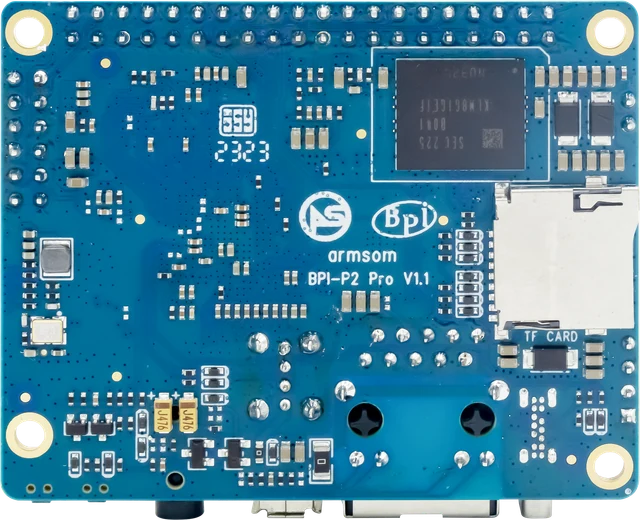
ArmSoM P2 Pro rear view from the existing product-media library.
Match the choice to your requirements
Requirement or situation | What to evaluate | Decision detail |
PDM | Digital microphone integration | Verify clock and capture route. |
I2S | Codec or digital audio connection | Match clocks, format and channel map. |
USB | External audio peripheral | Check device support, power and buffering. |
Example design
Compare audio routes with the same acoustic task
USB audio, I2S codecs and PDM microphones expose different integration choices. Compare them using the same capture conditions and required channel count. Check clocking, buffering and driver support before evaluating a higher-level speech algorithm. If playback is active while recording, include that condition in testing; a clean recording in silence does not establish useful full-duplex audio performance.
Hardware and documentation
P2 Pro · RK3308B-S
RK3308B-S, 256 MB / 512 MB DDR3, 100 Mbps Ethernet, PDM and I2S audio. Board size: 65 × 52.5 mm. Storage and power accessories depend on the ordered configuration.
Hardware documentation · Product details
Frequently asked questions
Can an eight-input description prove beamforming support?
No. Beamforming also requires a suitable synchronized array, geometry, calibration and software.
Product information and support
Sources
Written by ArmSoM using the documentation below. Example designs are proposals, not measured customer installations.