

A Linux voice device needs a usable audio path as well as enough resources for its software. P2 Pro brings audio-oriented interfaces and wired networking to that discussion. Microphone selection, driver support and the recognition workload will determine the complete design.
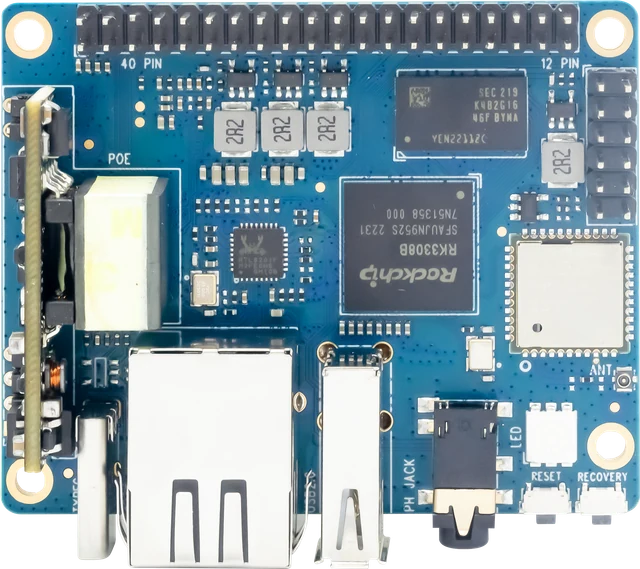
ArmSoM P2 Pro
Start at the microphone
Identify the microphone array or codec, its electrical interface and the required channel format. Confirm that the selected board image exposes those inputs before adding speech software. Record a clean sample and check channel order, clipping and noise. Debugging recognition is much harder when the capture path itself is uncertain.
Decide where recognition runs
Wake-word detection, noise suppression, speech recognition and synthesis have different CPU and memory costs. An audio endpoint can send recordings to another machine, use a compact local model, or combine both. Decide which processing must stay offline, then measure the chosen software on the target image. Large-model or real-time speech performance cannot be inferred from the audio connectors.
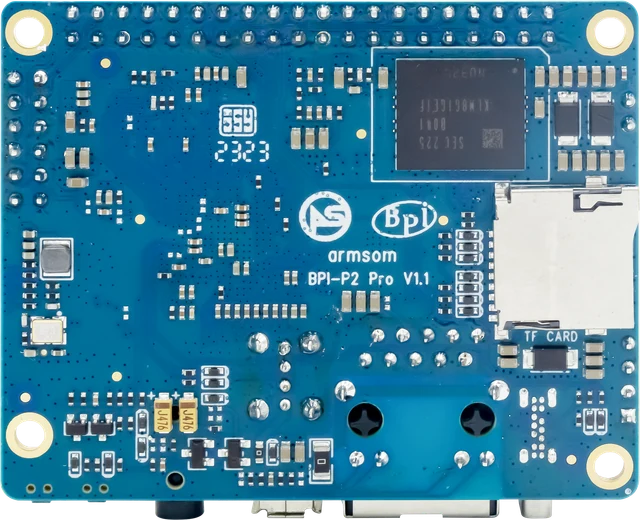
ArmSoM P2 Pro rear view from the existing product-media library.
Match the choice to your requirements
Requirement or situation | What to evaluate | Decision detail |
USB audio prototype | Verify the exact USB device | Check sample formats and reconnect behaviour. |
Embedded microphone array | Verify codec and clock configuration | Check each channel independently. |
Offline recognition | Choose a measured model budget | Test memory and sustained processing speed. |
Example design
Define what the voice device actually does
An audio endpoint that streams speech to another system has a different compute requirement from a device performing recognition locally. Specify wake-word detection, noise handling, speech recognition and response generation separately. P2 Pro can be evaluated around its audio interfaces, but the software and memory budget must follow the selected functions. A useful first demonstration captures a known recording correctly before adding recognition or a network service.
Hardware and documentation
P2 Pro · RK3308B-S
RK3308B-S, 256 MB / 512 MB DDR3, 100 Mbps Ethernet, PDM and I2S audio. Board size: 65 × 52.5 mm. Storage and power accessories depend on the ordered configuration.
Hardware documentation · Product details
Frequently asked questions
Does an audio-oriented board guarantee voice recognition?
No. Audio capture hardware and recognition software are separate parts of the system.
Product information and support
Sources
Written by ArmSoM using the documentation below. Example designs are proposals, not measured customer installations.