

The original Orange Pi 5 uses RK3588S; ArmSoM Sige7 uses RK3588. Sige7’s dual 2.5GbE and M.2 PCIe 3.0 x4 connection are concrete reasons to consider a move. A display or small service that does not need those interfaces may have little to gain.
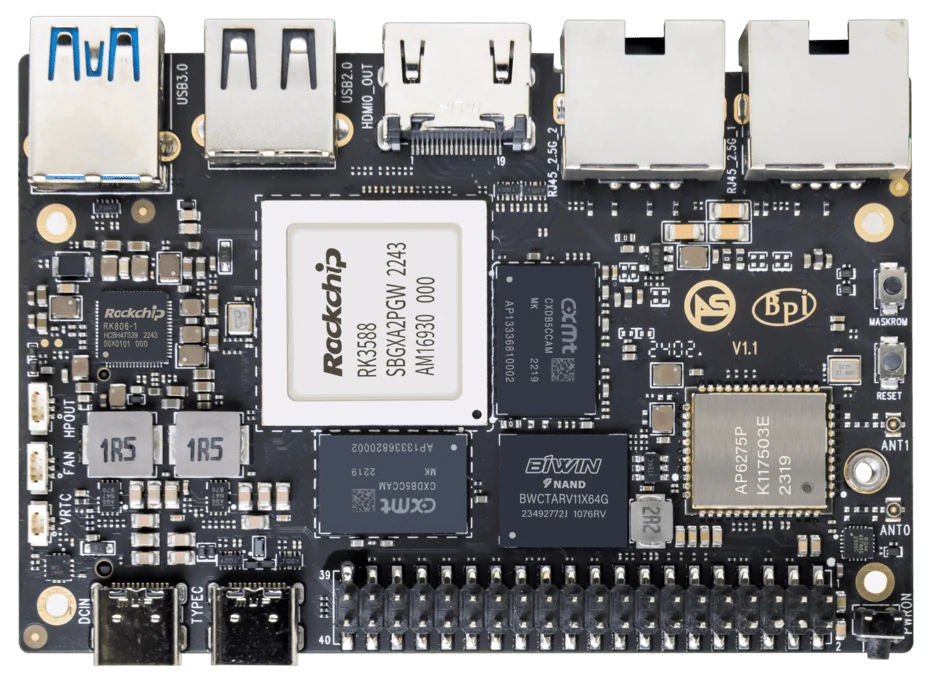
ArmSoM Sige7
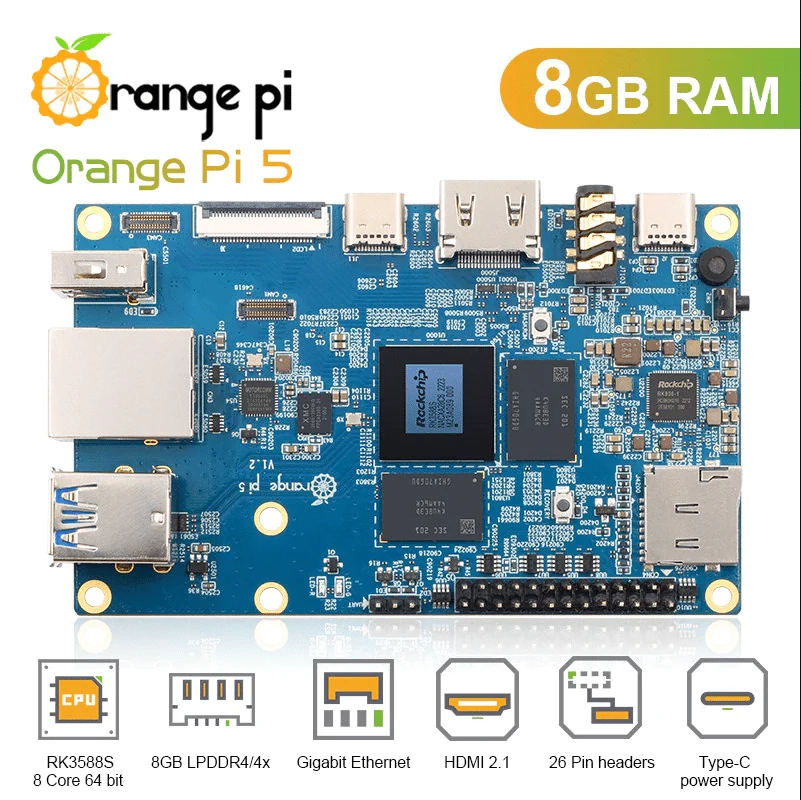
Orange Pi 5 Photo: Orange Pi / orangepi.net product listing
Images identify the boards and are not to physical scale. Pictured configurations and included accessories may differ.
Documented platform comparison
Decision point | Orange Pi 5 | ArmSoM Sige7 |
Processor | RK3588S | RK3588 |
Product identity | Base Orange Pi 5; not 5B or 5 Plus | Sige7; not Sige7s |
Network/storage decision | Verify the base-board manual and selected revision | Dual 2.5GbE; M.2 PCIe 3.0 x4 |
Software image | Base Orange Pi 5-specific image | Sige7-specific image |
Platform references: Orange Pi 5 manufacturer manual v0.7 (PDF, mirror); Sige7 documentation. Board revision, purchased configuration and software support must be checked separately.
Which Orange Pi 5 is on the desk?
Check the board label before using a specification table. The original 5, 5B and 5 Plus have different storage, networking and wireless arrangements. This article compares the original Orange Pi 5 with Sige7. Keep the full model and revision in the purchase list, operating-system notes and enclosure drawings.
Choose around the external devices
Sige7’s documented dual 2.5GbE and M.2 PCIe 3.0 x4 arrangement make networking and storage useful questions to start with. A small single-camera appliance may not need either capability. Conversely, a storage server could be constrained by its expansion path long before the CPU becomes busy. Draw the required device connections before comparing product photographs or headline AI capability.
A good alternative has a specific reason to exist
Sige7 is a relevant candidate if its physical interfaces and supported software meet a requirement the existing design cannot satisfy cleanly. Orange Pi 5 may remain preferable when your software and accessories are already validated on it. Neither conclusion should depend on invented benchmark charts. List the missing information, order the correct configurations, and measure the exact application before choosing a production platform.
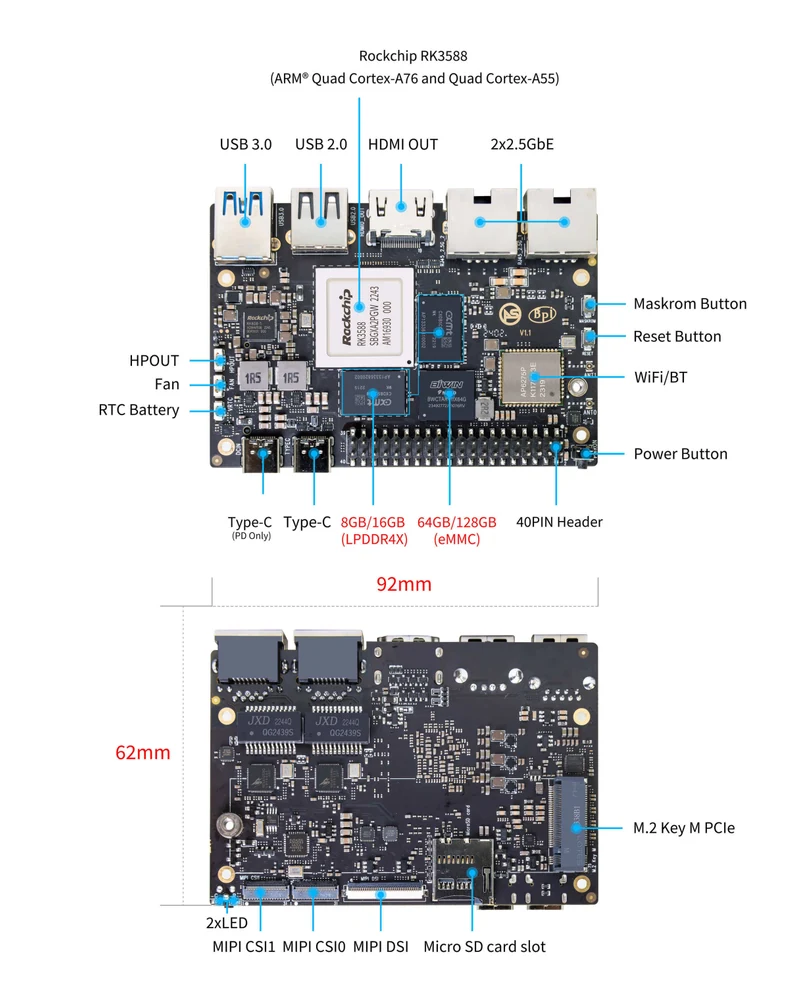
ArmSoM Sige7 board layout reference. Use the current product manual for connector and revision details.
Match the choice to your requirements
Requirement or situation | What to evaluate | Decision detail |
High-speed storage plus dual networking | Evaluate Sige7 | Validate SSD, network peer and cooling as a system. |
Already validated Orange Pi appliance | Keep a reproducible baseline | Changing software images can add hidden maintenance work. |
AI-only shortlist | Compare supported model paths | TOPS does not decide end-to-end latency. |
Exercise the actual media application
A desktop, player and recorder may use different drivers or acceleration paths. Run the intended application and file formats, identify its media backend, and check sustained playback or recording. For unattended displays, include hot-plug and restart behavior.
Example design
When additional interfaces justify a board change
Consider a logger that started with a USB SSD and one network connection. If the next version needs a dedicated maintenance network and a different storage route, Sige7 merits evaluation for those concrete requirements. If the application still writes only a small amount of data and has no second-network requirement, the interface expansion may offer little practical benefit. State the new requirement first; the board choice should follow from it.
Hardware and documentation
Sige7 · RK3588
RK3588, 6 TOPS NPU, dual 2.5GbE and M.2 PCIe 3.0 x4. Check the selected eMMC and wireless configuration.
Hardware documentation · Product details
Frequently asked questions
Is Orange Pi 5 the same as Orange Pi 5 Plus?
No. Use the exact product name and its own manual.
Does RK3588 guarantee faster CPU processing than RK3588S?
The extra platform interfaces do not establish a universal CPU-performance advantage.
Product information and support
Sources
Written by ArmSoM using the documentation below. Example designs are proposals, not measured customer installations. Comparisons use published specifications, not head-to-head benchmarks.