

An offline voice application has to capture usable audio, recognize speech and return a response within its memory budget. P2 Pro is relevant to the audio side of that design. Whether the complete application fits depends on the chosen models and services.
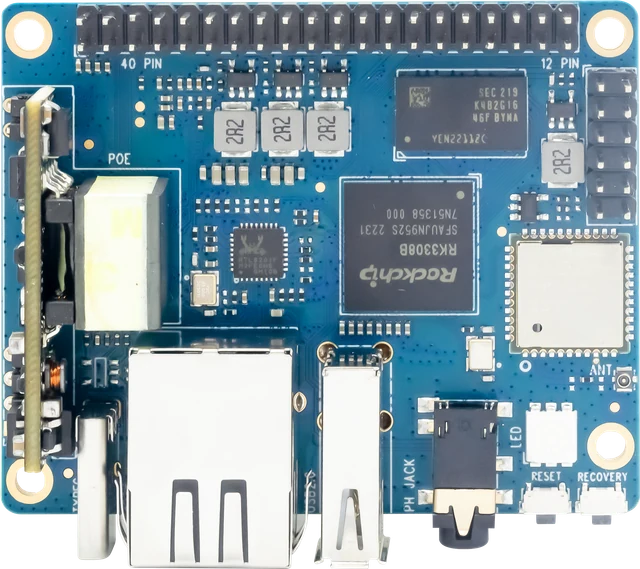
ArmSoM P2 Pro
Test capture before recognition
Record audio with the intended microphone, codec and board image. Check sample format, channel order and clipping, then listen to and inspect the recording. Add recognition only after that path is stable. Measure model loading and peak memory as well as response time; a system that swaps heavily may behave very differently after it warms up.
Test in the room where it will operate
Fan noise, speaker playback, distance and reverberation can affect recognition. Record a consented test set with the intended microphones and enclosure. Measure missed commands and false activations, including while the device is playing audio. A clear recording at a desk is not evidence of far-field performance.
Keep the offline promise precise
Disconnect the network and test startup, recognition and response. Check whether model downloads, authentication or time synchronization are hidden dependencies. Define behavior when confidence is low and provide a manual way to repeat or cancel an action. Store recordings only when needed and make that behavior understandable to users.
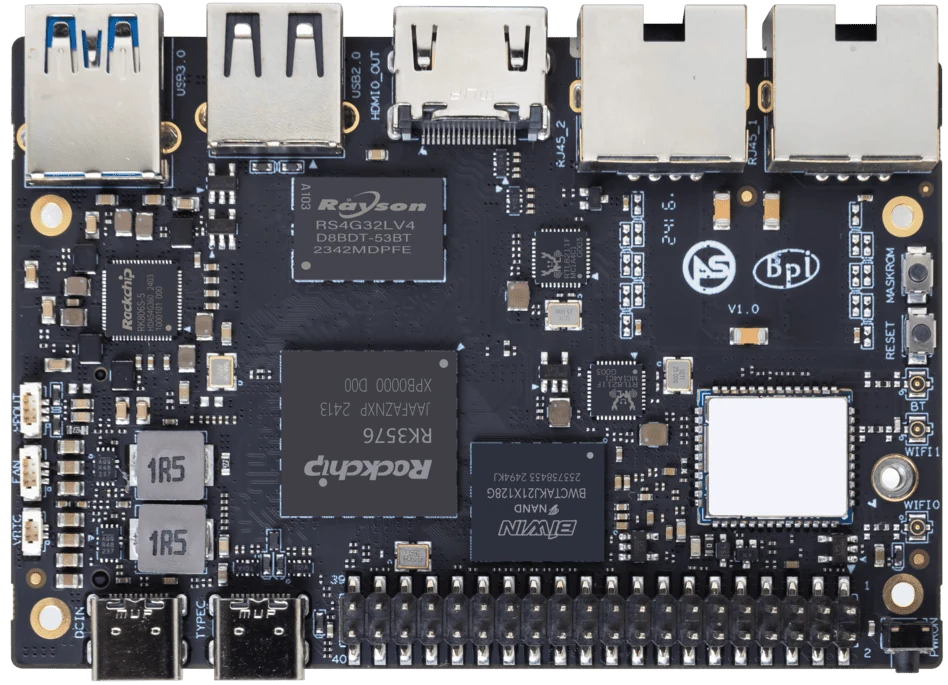
ArmSoM Sige5
Match the choice to your requirements
Requirement or situation | What to evaluate | Decision detail |
Capture | Microphone and enclosure | Measure noise and clipping. |
Inference | Chosen model and latency | Validate on the target processor. |
Offline behavior | Network disconnected | Test the complete interaction. |
Example design
Test offline voice under a disconnected network
An offline claim should survive unplugging the network after the system starts from a clean state. Check whether model files, licenses or initialization services are fetched remotely. Test wake-up, recognition and response stages separately using realistic background noise. A small audio board can act as a front end to another processor, but that architecture should be described explicitly rather than presented as all processing happening on the microphone endpoint.
Hardware and documentation
P2 Pro · RK3308B-S
RK3308B-S, 256 MB / 512 MB DDR3, 100 Mbps Ethernet, PDM and I2S audio. Board size: 65 × 52.5 mm. Storage and power accessories depend on the ordered configuration.
Hardware documentation · Product details
Sige5 · RK3576
RK3576, four Cortex-A72 and four Cortex-A53 cores, 6 TOPS NPU, dual Gigabit Ethernet and M.2 PCIe 2.1 x1.
Hardware documentation · Product details
Frequently asked questions
Does an audio-capable board automatically include an offline assistant?
No. The application, models, audio processing and interaction behavior must be integrated and tested.
Product information and support
Sources
Written by ArmSoM using the documentation below. Example designs are proposals, not measured customer installations.