

An AI demo becomes a product when capture, inference, storage, networking and recovery work together. Testing each component alone can miss queue growth, memory pressure or lost frames. Run the combined workload that the device will face after deployment.
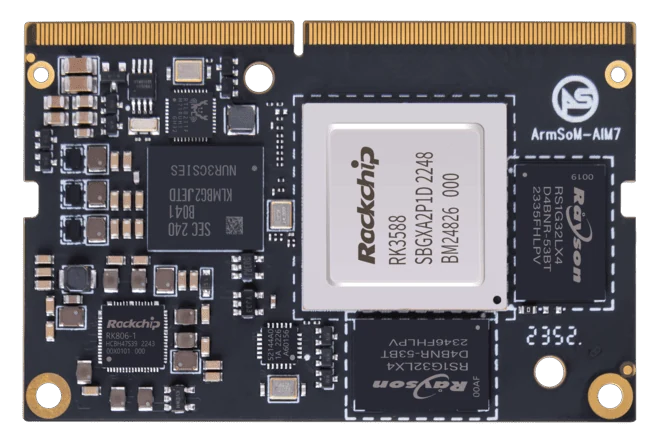
ArmSoM AIM7
Follow data from input to result
Mark each stage of the pipeline and record its queue size and processing time. Check whether a slow consumer causes frames or requests to accumulate. Define what the application drops, retries or records when overloaded. Repeat the run with logging and other background services enabled.
Add realistic contention
On Sige7 or AIM7, run the intended display, recording and networking tasks alongside inference. Observe CPU use, memory pressure, storage writes and temperature. Test camera reconnects and temporary output failures. Media and NPU acceleration reduce some CPU work, but buffer handling and application code remain part of the system.
Set acceptance criteria around decisions
Measure the time from scene input to the action or visible result that matters. Count missing frames and incorrect decisions as well as average speed. Keep a known input sequence for regression after driver or model changes. Report the tested resolution, number of streams, model and cooling so another engineer can understand the result.
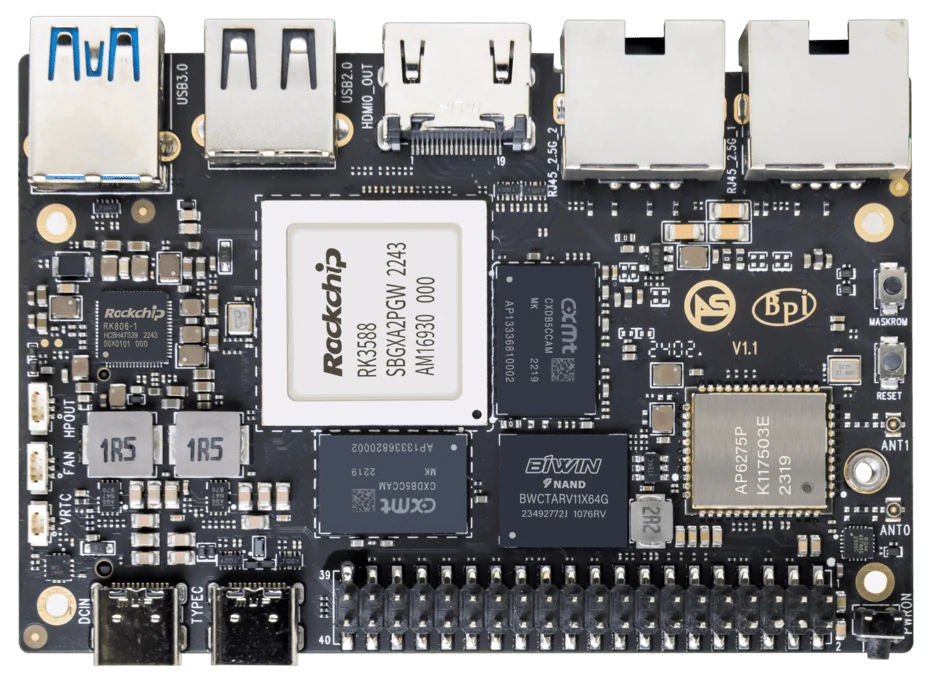
ArmSoM Sige7
Match the choice to your requirements
Requirement or situation | What to evaluate | Decision detail |
Freshness | Capture-to-output latency | Watch queue growth. |
Concurrency | Camera, UI, storage and network | Run together. |
Recovery | Disconnects and service restarts | Check automatic resumption. |
Example design
Trace one frame from arrival to decision
Assign timestamps at acquisition, preprocessing, inference and result delivery. This makes queue growth visible when storage or networking competes with inference. Decide whether the application should drop old frames or process every frame, because those policies produce different behavior under load. A real-time decision system often values a recent answer more than a complete backlog of stale answers. Test the chosen policy under the slowest expected input and output conditions.
Hardware and documentation
Sige7 · RK3588
RK3588, 6 TOPS NPU, dual 2.5GbE and M.2 PCIe 3.0 x4. Check the selected eMMC and wireless configuration.
Hardware documentation · Product details
AIM7 · RK3588
RK3588 module with a 6 TOPS NPU and 260-pin SO-DIMM connector. ArmSoM has tested a Jetson Nano B01 carrier; this does not establish compatibility with all Jetson carriers or NVIDIA software.
Hardware documentation · Product details
Frequently asked questions
Can I add camera FPS and inference FPS to describe system speed?
No. They measure different stages. End-to-end throughput is constrained by the pipeline and its buffering policy.
Product information and support
Sources
Written by ArmSoM using the documentation below. Example designs are proposals, not measured customer installations.