

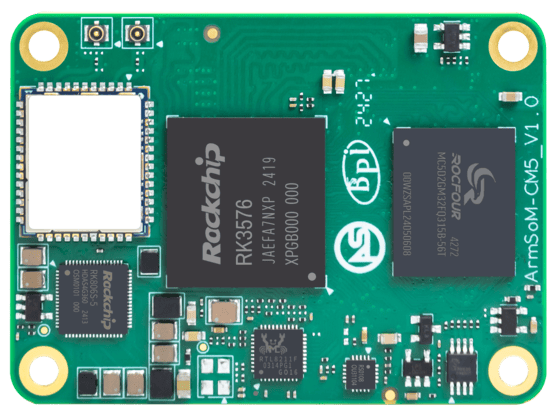
ArmSoM CM5 product photograph.
A prototype proves that a design can work. Production requires that it can be assembled repeatedly, tested efficiently and maintained after shipment. The gap is often found in configuration control and failure recovery rather than the application's main feature.
For a Rockchip-based product, treat hardware, boot software, operating-system image and application as one release. That release should identify exactly what was tested and how a factory or service team can reproduce it.
Freeze a configuration, not just a product name
Record the module and carrier revisions, memory and storage configuration, wireless components, power supply, cooling and attached peripherals. Save the approved BOM and the criteria for any replacement component.
A memory or storage substitution can affect boot training, timing, power and application behavior even when its nominal capacity matches. Route substitutions through a change review and a defined validation plan. Keep the resulting revision traceable to shipped units.
Link the software image to that hardware configuration. Include bootloader, kernel, device tree, root filesystem, application and accelerator-library versions where applicable.
Validate the final enclosure and workload
Run the actual application with cameras, displays, networking and storage active. Evaluate temperatures and sustained performance in the intended enclosure, using the intended power supply and realistic environmental conditions.
Choose acceptance limits from the product requirements. For an AI device, include accuracy and response latency. For a gateway, include communication recovery and queue limits. For an HMI, include startup behavior and valid-data indication.
Use controlled fault tests on development units. Include interrupted power, disconnected peripherals, full storage and unavailable services where relevant. Record the expected recovery behavior before running the test.
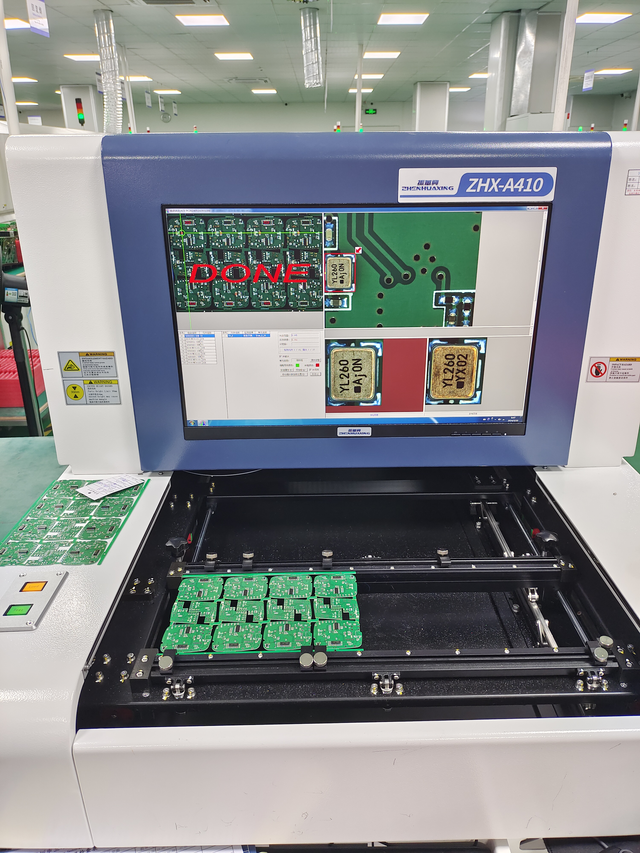
Optical inspection equipment at an ArmSoM long-term manufacturing partner. Photo supplied by ArmSoM.
Give storage a lifecycle plan
Estimate writes from logs, databases, recordings and updates. Bound unnecessary logging and define retention. Decide how configuration is protected from incomplete writes and how the device behaves when free space becomes low.
Keep a recoverable system image and protect user data during updates. If the design uses rollback or multiple system partitions, test the failure paths as well as a normal update. A recovery feature that has never been exercised is still an open requirement.
Make factory programming traceable
The programming station should record unit identity, hardware revision, image checksum, programming result and final test result. Verify the image after transfer using the checks supported by the process.
Provision unique identities and credentials appropriately for the product. Avoid cloning a development image that accidentally gives every unit the same machine identity, private key or network configuration. Keep debug access consistent with the intended service process.
Store manufacturing records so a field report can be connected to its build. The record should help answer what changed between a working unit and a failing one.
Use a layered factory test
Layer | Purpose |
Assembly and power | Detect visible defects, incorrect parts and abnormal rail behavior |
Boot and identity | Confirm the correct image and unit configuration |
Functional interfaces | Exercise the connections the customer will use |
Application check | Verify a known input produces the required result |
Final record | Associate the pass result with the shipped unit |
Separate per-unit tests from longer design-validation or sampling tests. Define coverage and sampling with the product's risk and quality requirements in mind. A short factory test should detect assembly faults; it cannot substitute for all environmental validation.
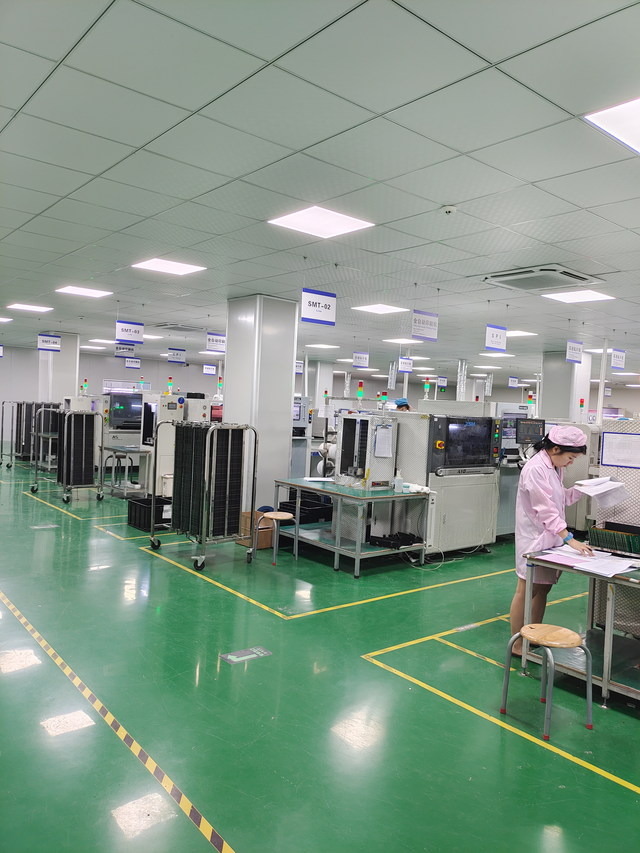
Production floor at one of ArmSoM's long-term manufacturing partners. Agree on the programming, inspection and test records required for your own product. Image: ArmSoM.
Ship a maintainable release
Prepare recovery instructions, update policy, known limitations and a support log-collection procedure. Assign responsibility for software maintenance and component changes. Keep the manufacturing image and source/build inputs accessible to the people who maintain the product.
ArmSoM's development services can be discussed in terms of these deliverables. Bring a requirement and acceptance list so hardware, software and production responsibilities can be agreed before the pilot build.