

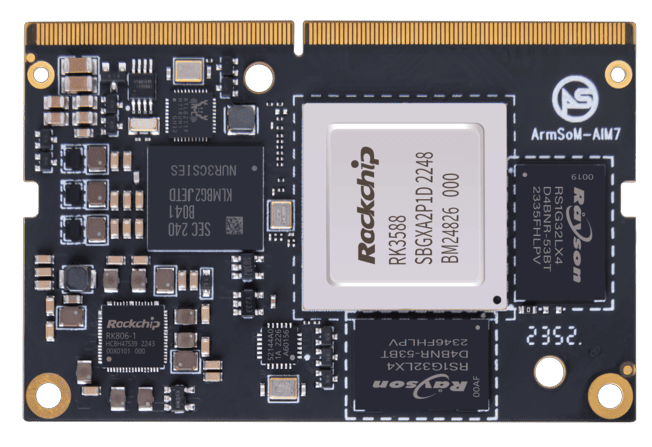
ArmSoM AIM7 product photograph.
A useful hardware quotation begins with a description of the product and the work required to make it real. “An RK3588 board with Linux” leaves too many questions open: which interfaces, which image, which enclosure and what counts as a successful delivery?
You do not need a perfect specification to start a discussion. A short, organized brief lets ArmSoM identify the right starting platform and the engineering questions that need to be resolved before a detailed proposal.
Choose the scope of customization
Start by deciding whether an existing product can meet the requirement through configuration, whether a custom carrier is needed around a module, or whether the application calls for a new board and broader product development.
ArmSoM's OEM/ODM page describes these starting routes. The appropriate scope depends on the required changes and their feasibility. Use the project brief to explore that scope before treating any development schedule or cost as fixed.
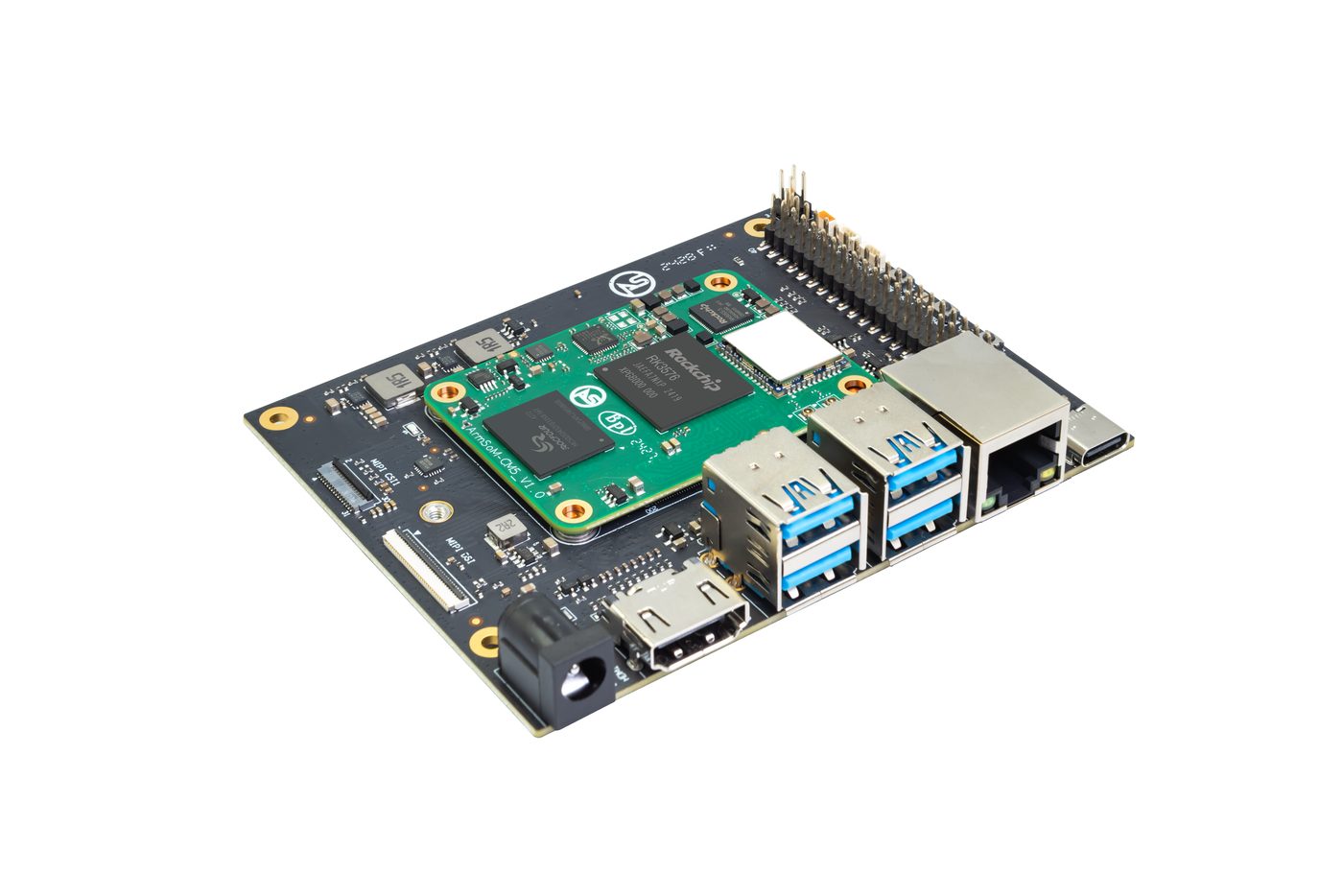
CM5 on an IO carrier board illustrates a module-and-carrier approach. An OEM/ODM brief should distinguish carrier customization from changes to the compute module. Image: ArmSoM.
Describe the product before the processor
Explain what the device does, who operates it and where it will be used. Include the current prototype or reference design if there is one. If a processor has already been selected, say why; if the choice is open, describe the workload and let it inform the selection.
For an AI system, include the model family, input dimensions, camera arrangement and required response time. For a gateway, include protocols, device count and offline behavior. For an HMI, include the panel, touch controller and interface requirements.
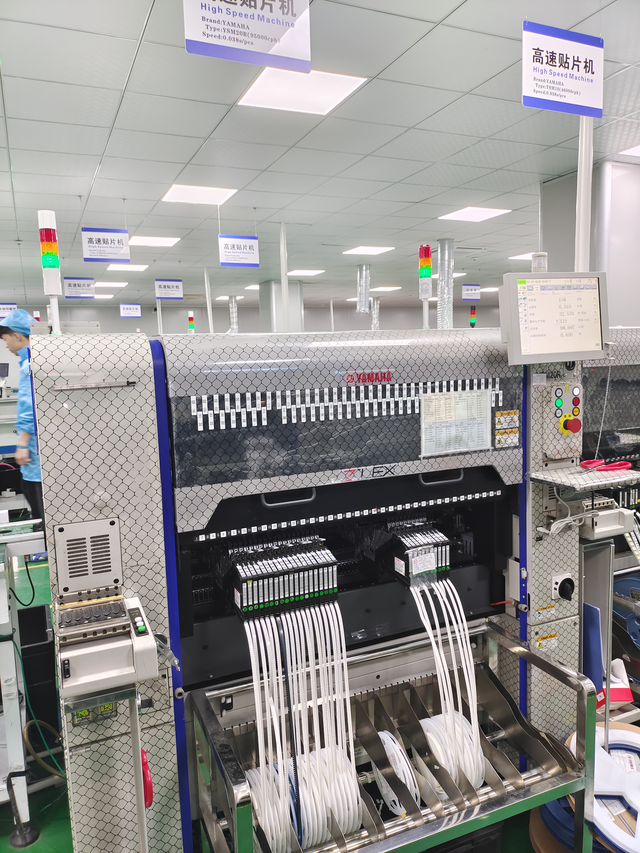
SMT assembly equipment at an ArmSoM long-term manufacturing partner. Photo supplied by ArmSoM.
Use this project brief
Field | Information to provide |
Приложение | What the product does and the problem it solves |
Existing design | Prototype, current board, schematic or reference product |
Compute workload | Application, models, media formats and measurable targets |
Memory and storage | Required capacity, write workload and removable-media needs |
Интерфейсы | Quantity, connector type and simultaneous-use requirements |
Периферийные устройства | Exact camera, panel, touch and expansion-device models |
Питание | Input source, operating modes and backup-power requirements |
Mechanics | Board outline, connector positions, enclosure and mounting |
Environment | Temperature, vibration, moisture and installation conditions |
Программное обеспечение | Operating system, kernel dependencies, application and update needs |
Commercial plan | Evaluation quantity, pilot quantity and estimated production demand |
Schedule | Required milestones and external dependencies |
Acceptance | Tests and measurable pass criteria |
Deliverables | Hardware files, source/build inputs, documentation and production support |
It is acceptable to mark a requirement as undecided in the initial brief. Explain who will decide it and when. That is more useful than supplying a guessed value that later becomes a design constraint.
Define acceptance in observable terms
Replace vague goals such as “fast AI” or “stable operation” with a test scenario. Describe the input, workload, environment, duration and required outcome. For example, define the camera stream and the maximum allowed application delay instead of requesting a headline NPU number.
Include recovery behavior. A device may need to resume acquisition after a network interruption or retain configuration after a controlled power-loss test. These requirements affect both hardware and software architecture.
Agree what is handed over
Specify the design files, software sources, build instructions, manufacturing information and test procedures the project requires. Discuss ownership, third-party dependencies and access terms before development begins.
Separate one-time development work from recurring hardware cost and ongoing maintenance. Ask how revisions, component substitutions and software updates are handled. A clear scope makes quotations easier to compare and reduces surprises during the pilot stage.
Turn the brief into a first engineering discussion
Attach the most useful existing material: a block diagram, interface list, enclosure drawing, prototype photos and any logs or test results. Identify the functions with the greatest uncertainty so the first evaluation addresses them.
Send the brief to sales@armsom.org or use the ArmSoM project inquiry page. The next step is to agree a feasible architecture, evaluation scope and deliverables around the product you intend to build.